
What to Document Before an Electrical Repair Visit in Austin
Before an Austin electrical repair visit, record the symptoms, timing, affected circuits, and recent changes—without opening electrical equipment.
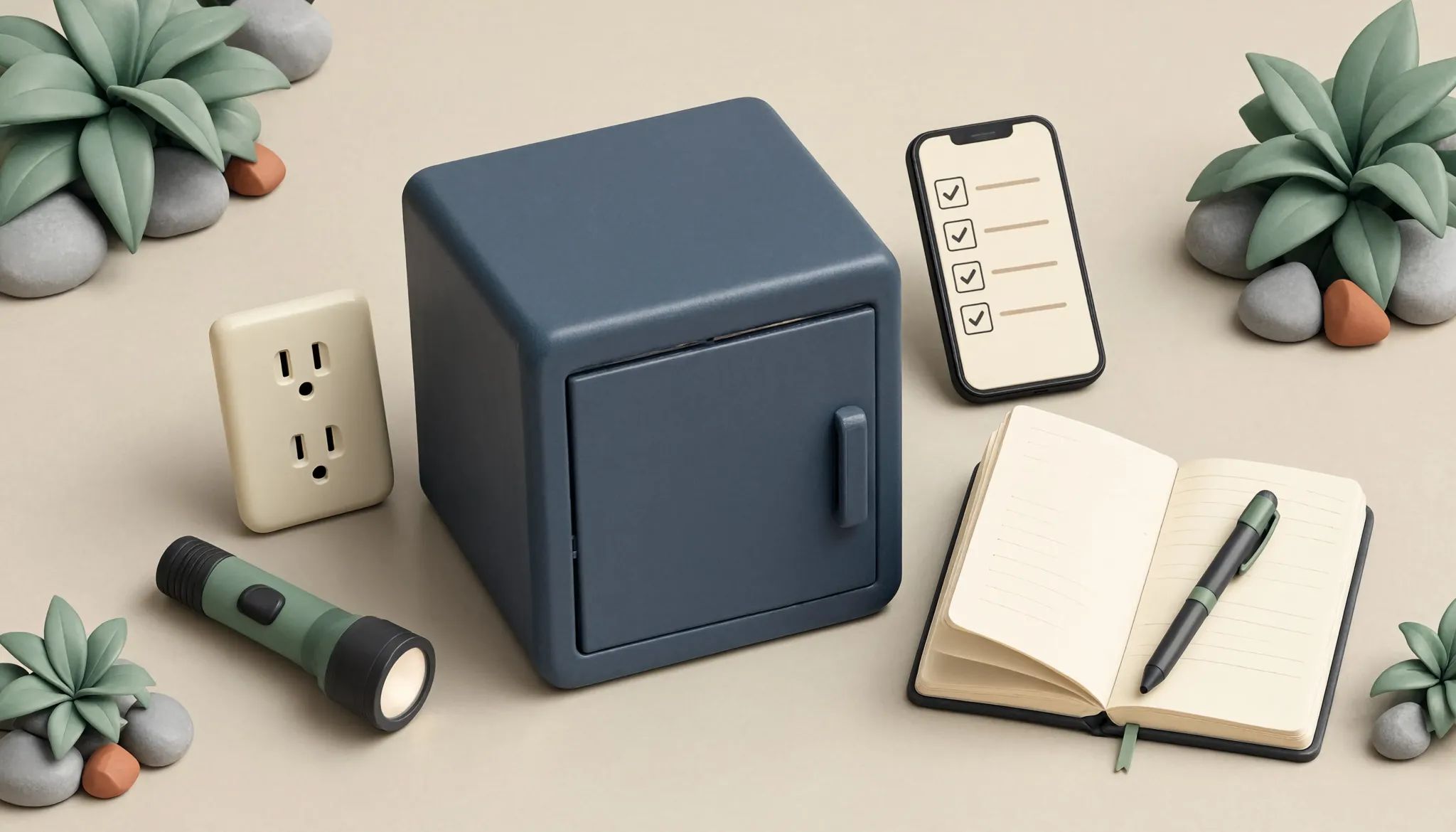
Electrical problems rarely arrive with a neat explanation. A receptacle stops working, a light flickers at certain times, or a breaker trips without an obvious pattern. The useful first step is not guessing which part failed. It is recording what happened without creating another hazard.
A clear symptom record gives an electrician a practical place to begin. It can also help you explain the problem when you request residential electrical repair. Here is what to capture, what to leave alone, and how to turn scattered observations into a useful service request.
Stop and get emergency help if needed. If there is fire, smoke, an injury, or another immediate danger, move away and call 911. If a utility line is down, stay at least 35 feet away; in Austin Energy's service area, report it at 512-322-9100. Austin Energy's outage-safety guidance says not to approach downed lines. Do not touch, open, or test the equipment.
Start with safety, not a diagnosis
Document only what you can observe during normal use or from a safe distance. If a closer look would require removing a faceplate, opening a cover, loosening a screw, moving a wire, or reaching near damaged equipment, stop. Those steps belong to the electrician.
The same boundary applies when a symptom seems to disappear. Do not create extra tests to make it happen again. Do not plug in more devices to compare results, hold a switch between positions, or keep cycling a breaker. Note what happened once, then leave the equipment alone.
Treat heat and odor as observations, not invitations to check again. If you noticed that a switch plate felt warm during ordinary use, write that down. Do not touch it again to confirm. If you noticed an odor, record where and when you noticed it rather than returning for another smell.
A few general safety rules can help with nearby equipment. Austin Energy's home safety guidance says to use appliances according to the manufacturer's instructions, discard cracked or frayed extension cords, and remember that a power strip does not increase the power available from an outlet. That means a repair visit is not the time to improvise with cords, adapters, or extra power strips.
Around utility equipment, lines, and active utility work, keep your distance. Austin Energy tells the public not to assist crews working on electrical equipment and to let professionals handle repairs and restoration. The U.S. Consumer Product Safety Commission also maintains an official electrical safety resource with a linked safety guide.
Write a clean symptom timeline
Start a note on your phone or a sheet of paper. Use plain language. The goal is to preserve what you observed, not to name a cause.
Record these details:
- What happened: A light dimmed, an outlet stopped supplying power, a breaker moved to the tripped position, or an appliance shut off.
- Where it happened: Name the room and the specific wall, fixture, outlet, or device.
- When it happened: Add the date and approximate time.
- How long it lasted: Note whether the issue was brief, continuous, or still present when you stopped using the area.
- How often it happens: Say whether it happened once, several times, or at an irregular interval.
- What else was in use: List the appliances, lights, chargers, heating equipment, or tools that were already running.
- What you noticed: Include visible discoloration, a sound, an odor, or heat only if you noticed it during ordinary use.
Keep observation and interpretation separate. “The kitchen lights dimmed for two seconds when the microwave started” is useful. “The microwave overloaded the circuit” is a diagnosis that the observation alone cannot prove.
Timing matters because an intermittent problem may not be present during the visit. A short log can show whether the symptom appears at startup, after equipment has run for a while, during a particular part of the day, or without a pattern. “No pattern found” is also useful. It is more accurate than forcing unrelated events into a theory.
If a breaker tripped, record the label printed beside it, its position, and what was running at the time. Do not repeatedly reset it to build a better timeline. One accurate observation is enough for the intake note.
Map the affected area and recent changes
Next, mark the known boundary of the problem. This does not mean testing every outlet in the house. List only what you already know from normal use.
For example:
- One receptacle on the north kitchen wall is not working.
- Two bedroom outlets and the ceiling light were affected at the same time.
- The hallway light flickers, but nearby rooms appear normal.
- The problem appears limited to an outdoor fixture.
- Several areas changed at once, but the exact circuit is unknown.
If you know the breaker label associated with the area, include it. If the directory is unclear or uses old room names, copy the wording exactly rather than correcting it from memory.
Then list recent changes around the home. Useful context may include:
- A new appliance, power strip, extension cord, charger, heater, or tool
- Remodeling, painting, drilling, wall work, or cabinet installation
- Recent electrical work, even if it seemed unrelated
- A utility outage, storm, or visible exterior damage
- An appliance that was moved, repaired, or replaced
- A symptom that began after the home had been vacant
These details are context, not proof. A storm before a flicker does not establish the cause. A new appliance does not prove the appliance or circuit is faulty. The electrician still needs to evaluate the system.
Take useful photos without opening anything
A useful photo answers “where is this?” before it tries to show a tiny detail. Take a wide image first, then a closer image only when you can do so without touching the equipment or entering an unsafe area.
Safe photo subjects may include:
- The affected outlet, switch, light, or appliance from the outside
- A wider view showing where that item sits in the room
- Visible discoloration or physical damage that can be photographed without approaching it
- The closed exterior of the electrical panel
- A circuit directory or equipment label that is already visible during ordinary use
- Exterior equipment photographed from the ground and from a safe distance
Do not remove an outlet cover, switch plate, panel dead front, fixture canopy, appliance cover, or equipment panel for a photo. Do not reach around a damaged device for a serial number. Do not open something because the picture seems incomplete. An incomplete safe photo is better than a revealing photo that required disassembly.
For each image, add a short caption in the service request. “Laundry room, west wall, outlet behind washer” is better than “problem outlet.” If a photo shows the panel, identify whether it is indoors or outdoors and where it is located. If the label is not readable, say so instead of retaking the image from an awkward position.
Photos are not a remote diagnosis. They provide layout and visible-condition context. The on-site evaluation determines what the symptom means and what work is appropriate.
Send a repair request with a useful starting point
Combine the notes into a short message. It does not need to be polished. It needs to be specific.
Use this format:
- Property: Street address and the best way to access the affected area
- Symptom: One sentence describing what happened
- Location: Rooms, devices, and known affected areas
- Timeline: First occurrence, most recent occurrence, duration, and frequency
- Status now: Still present, intermittent, or no longer observed
- Breaker behavior: Label and observed position, if known
- Recent changes: Appliances, remodeling, outages, weather, or prior electrical work
- Photos: Wide view, affected equipment exterior, closed panel exterior, and visible labels when safe
The property address matters in the Austin area. Austin is not one utility or permitting jurisdiction. Austin Energy says about half of its own service area is inside Austin city limits, with the rest extending into surrounding communities. Use AltoService's service area page to start the address conversation rather than assuming the city name settles the question.
You can check contractor licensing through TDLR's public license search. To verify AltoService, search Electrical Contractor license number 39963 rather than relying on a date copied into an article.
The symptom record will not determine the final scope. A visit may find a device-level issue, a circuit concern, or a reason to evaluate broader equipment. Symptoms alone do not establish that a home needs a panel replacement. If the evaluation shows that the panel or service equipment affects the repair, the panel upgrade page explains that separate scope.
Ready to discuss the next step? Contact AltoService.
Send the property address, a short symptom timeline, the affected rooms or circuits, any recent electrical changes, and clear photos that don't require removing a cover. AltoService can confirm availability and the next step.