
Planning a Standby Generator Installation in Austin
Planning a standby generator in Austin? Define priority loads, then verify placement, fuel, transfer equipment, permits, and existing electrical capacity.
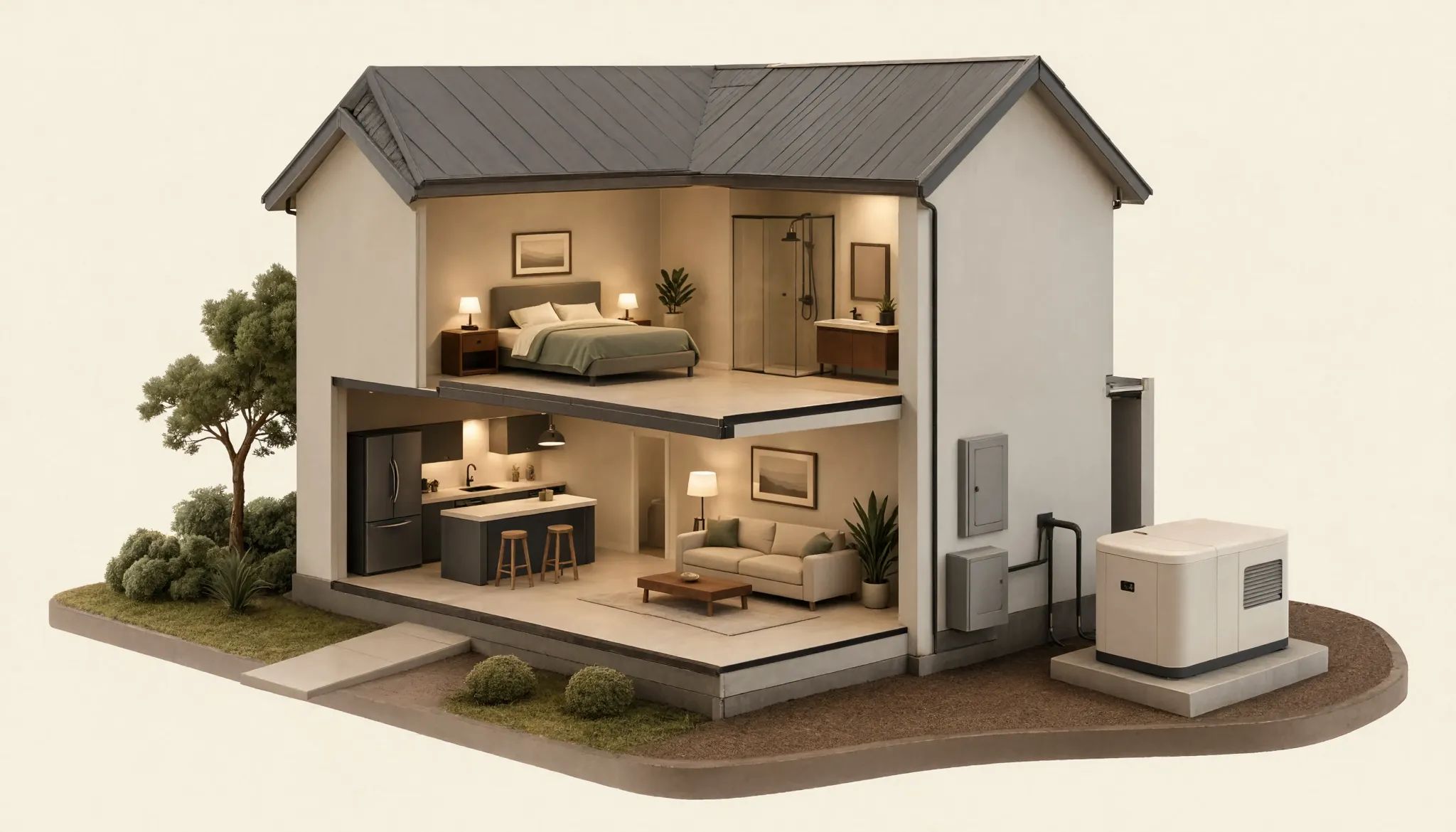
A useful generator quote starts with a clear outage plan. The plan should name the loads that matter, the equipment already at the house, and the groups that control permits and utility service at the address.
Those details shape the project long before anyone selects a generator. They also make it easier to compare quotes by scope, not guesswork.
This guide covers the planning questions behind generator installation in the Austin area, but it doesn't provide electrical or gas instructions. Licensed professionals and the authorities that govern the property must handle those parts.
Start with the loads that matter
“Whole home” sounds precise, but it can hide very different plans. One homeowner may want lights, a refrigerator, internet, and a few outlets. Another may expect air conditioning, cooking equipment, water heating, a well pump, and every ordinary household load to remain available.
Start with a written list divided into three groups:
- Must stay available: Loads tied to health, water, refrigeration, security, communications, or other household essentials.
- Would be useful: Comfort and convenience loads that could be managed during an outage.
- Can remain off: Large or optional loads that don't need backup power.
Be specific. Name “air conditioning” instead of “comfort,” and record a model number instead of “appliance.” Photos of equipment labels can help an electrician see what needs closer review.
This isn't a generator sizing exercise for the homeowner. It records the outcome the household expects, while the installer still evaluates the selected equipment, loads, and electrical system together.
Some designs can include central air, but the answer depends on the equipment and plan. Put it on the list and ask how the quote handles it. Don't assume the phrase “whole home” settles the question.
If you are still deciding between fuel-based backup and stored energy, compare a home battery, standby generator, or combined design before locking the equipment scope.
Check the electrical system before choosing equipment
The generator is only one part of the project. The main panel, service equipment, free space, equipment condition, and planned transfer equipment can all affect the electrical work.
A generator installation doesn't automatically require a panel upgrade, but an electrician should not rule one out without looking. The electrician may need to assess whether the existing equipment can support the proposed backup design and whether the home has separate electrical concerns to address first.
Useful records include:
- Clear photos of the main panel with its cover closed
- A photo of the panel directory
- Photos of exterior service equipment
- Model labels for large loads on the backup list
- Notes about known electrical problems or recent electrical work
- Information about solar, batteries, an EV charger, or other major equipment
Don't remove panel covers to get a better photo. If the system already has heat, odor, damage, repeated trips, or power that cuts in and out, discuss that concern separately through residential electrical repairs.
If the existing service or panel may limit the project, review AltoService's panel upgrade service before treating generator equipment as the only decision.
Understand transfer equipment and site coordination
A standby generator needs compatible transfer equipment to work with the home's electrical system. Austin Energy's home electrical safety guidance says only a licensed electrician can connect a generator to house wiring using a transfer switch.
The transfer step is central. One manufacturer's high level example shows the basic order: utility power is lost, the generator senses a problem, and the generator restores power. The order comes from Generac's home standby generator page, so it is one manufacturer's description rather than a rule for every model or system.
Ask each installer to identify what the proposal includes:
- Generator equipment and the exact model under consideration
- Transfer equipment and how it fits the backup plan
- Electrical modifications at the panel or service
- Load management, if proposed
- Equipment pads, barriers, or other site work
- Fuel work and the party responsible for it
- Permit, inspection, and utility coordination
- Startup, owner orientation, and documents provided at completion
This list exposes gaps because a short equipment quote and a complete project scope aren't the same thing.
Placement needs the same care. Before settling on a location, note windows, doors, vents, utility equipment, property lines, access paths, drainage, and the likely fuel route. Then check the chosen equipment's instructions and the rules for the address because a convenient empty spot isn't enough evidence for final placement.
Fuel work deserves its own line in the quote. Ask who reviews it, who does it, which permit applies, and how it fits with the electrical work. Don't treat gas or propane work as an implied part of an electrician's scope.
Verify the authority for the address
“Austin” describes a broad service area, not one permit office or one electric utility.
Austin Energy makes the difference clear on its service area map. The utility says it covers about 437 square miles, with about half inside Austin city limits and parts of other communities also in its area. An Austin Energy account therefore doesn't prove that the City of Austin issues the permits, and the reverse assumption can fail too.
For a property under City of Austin permitting jurisdiction, the current standalone permit page says stand alone building or trade permits may be issued when the full project scope qualifies. Keep the word “may” because the page doesn't create one universal permit route for every Austin area generator project.
The same City page describes an SB 1202 process for qualifying generator and battery storage work up to 600 volts at one or two family homes. Austin Energy's auxiliary permit process stays the same. A project that needs a shutdown also needs a separate electrical permit and City inspection, while natural gas or propane work needs a separate plumbing permit and City inspection.
Those statements have a narrow scope: current City of Austin guidance for properties under City jurisdiction. A nearby city, county area, or other utility territory may follow a different process.
Before accepting a proposal, ask:
- Which authority permits work at this address?
- Which electric utility serves the property?
- Does the project require utility review, auxiliary permits, or a shutdown?
- Who will obtain each permit and request each inspection?
- Does fuel work create a separate permit and inspection path?
- Which documents will show that required inspections are complete?
Before hiring, use TDLR's public license search to check the contractor's current status. To verify AltoService, search Electrical Contractor license number 39963.
Build a quote request that can be scoped
A strong first message doesn't need to solve the project; it needs to give the electrician a clean starting point.
Send:
- The full property address
- The list of loads you want available during an outage
- The generator make and model, if already selected
- Photos of the closed main panel, directory, and exterior service equipment
- Photos of the proposed generator area from several angles
- Notes about fuel type and the location of existing fuel equipment
- Details about solar, batteries, EV charging, or other major electrical loads
- Any known electrical problems or planned remodeling
Keep safety separate from project planning because portable generators create a different risk. The CDC's carbon monoxide guidance says portable generators produce carbon monoxide, must never be used inside a home or garage, and should run outdoors more than 20 feet from windows, doors, and vents. It also calls for battery powered or battery backup carbon monoxide detectors. Those instructions don't replace the documents for a permanently installed standby system.
Ready to discuss the project? Check AltoService's broad Austin area availability, then send the property address and planning details. Include the generator model if one is already selected, the loads you want protected, and photos of the main panel and planned equipment area. AltoService can confirm service availability and the next scoping step.