
Tesla Wall Connector vs. Universal Wall Connector in Austin
Compare Tesla Wall Connector and Universal Wall Connector by vehicle fit, parking layout, panel capacity, and plans for a second EV in Austin.
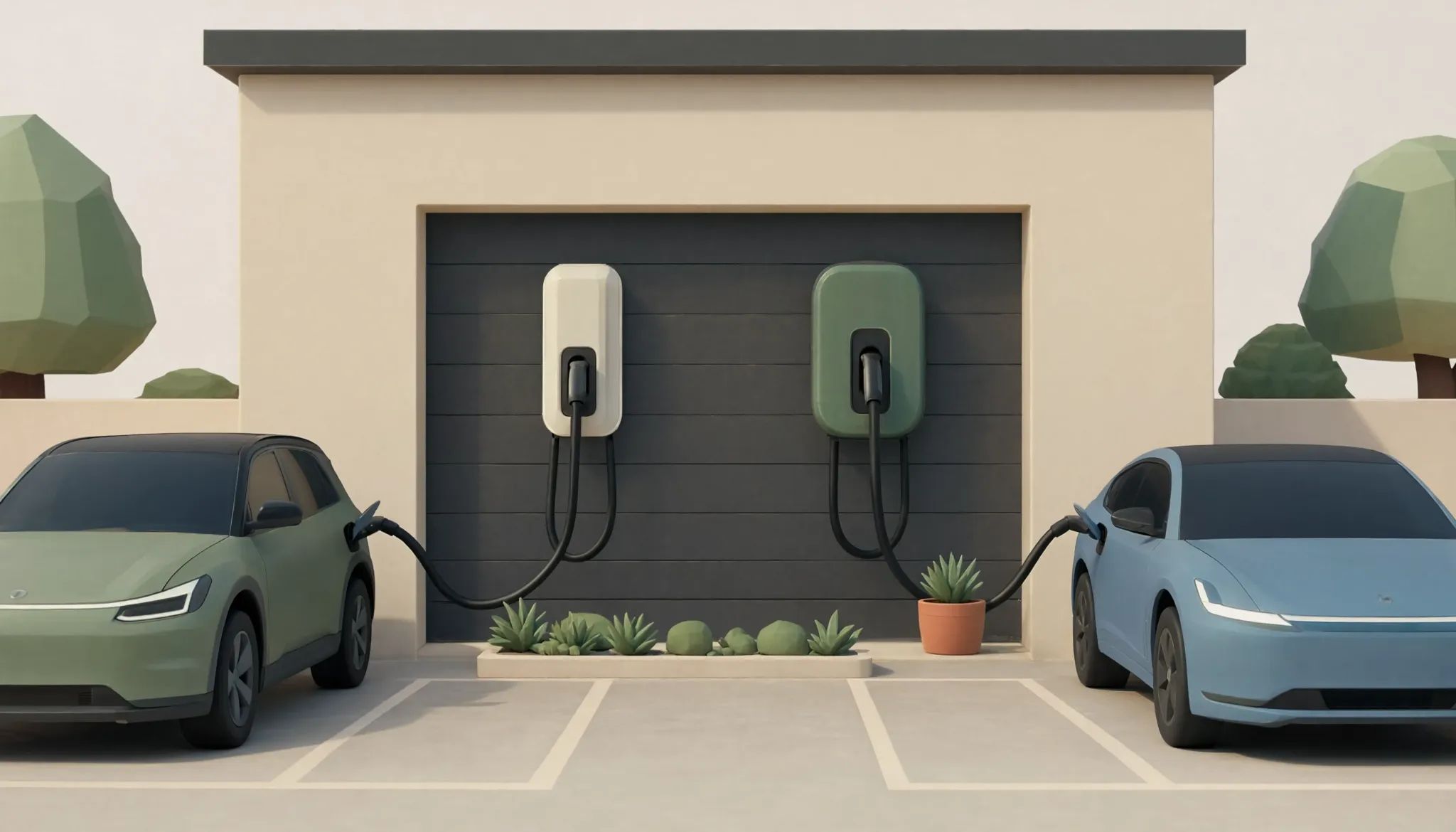
The better Wall Connector is the one that fits the vehicles, parking pattern, and electrical design at your home. Product choice comes first. Installation fit decides whether that choice works.
Tesla's current Home Charging comparison lists Wall Connector with a NACS plug and Tesla vehicle compatibility, while Universal Wall Connector adds NACS and J1772 and is listed for all EVs. Tesla's broader Wall Connector support also says compatibility depends on the plug matching the vehicle. Verify the exact vehicle and product before ordering.
That still doesn't make the Universal model the automatic winner. The right decision depends on what you drive, what you may drive next, where each vehicle parks, and what the home's electrical system can support.
Quick answer: which Wall Connector should you shortlist?
Shortlist the standard Tesla Wall Connector when every current and expected vehicle can use its NACS handle and you don't need an integrated J1772 option at the charging location.
Shortlist the Tesla Universal Wall Connector when the same charging position needs to serve both NACS and J1772 vehicles. Tesla's current Universal Wall Connector manual shows a NACS handle plus a J1772 adapter stored in the unit's dock.
Use that as a product screen, not a final installation decision. Before purchasing either unit, confirm:
- The exact vehicle models, charge inlets, adapters, and parking spot for each car
- The wall or pedestal location, cable path, and indoor or outdoor exposure
- The panel space, power available, and likely circuit route
- Whether a second charging spot or current Tesla power-management feature belongs in the plan
A product can fit the vehicle and still be awkward at the house. A clear installation plan tests both.
Vehicle fit starts with the connector mix
The word “Universal” describes a broader connector approach. It doesn't promise support for every vehicle, model year, inlet position, adapter, or charging condition.
Tesla's current Universal Wall Connector instructions show two operating paths: the NACS handle comes out of the holster for a supported NACS vehicle, while releasing the integrated adapter from its dock forms the J1772 handle.
That distinction matters most in a mixed-EV home. One wall-mounted unit may be able to serve two connector types without leaving a separate adapter loose in the garage. But the homeowner still needs to verify the exact vehicles and current Tesla documentation before treating that setup as compatible.
Make a simple vehicle list:
- Record each current vehicle's year, make, model, and charge inlet.
- Add any vehicle the household expects to buy during the useful life of the installation.
- Note where each vehicle normally parks and which side faces the charger.
- Record any adapter already used or expected.
- Verify the final combination against current vehicle and Tesla instructions.
Don't buy around a vague idea such as “we may get another EV.” Name the likely connector type and parking position. That turns a guess into an installation input.
Charging output isn't the same as vehicle charge rate
A Wall Connector's available output and a vehicle's accepted charging rate are separate limits. The circuit, commissioning settings, vehicle, battery state, temperature, and vehicle controls can all affect what the car accepts at a given moment.
Buying equipment described with a higher maximum doesn't guarantee that every vehicle will charge at that number. It also doesn't prove the home should be designed around the maximum possible branch circuit.
The useful question is narrower: how much energy does each vehicle need during its normal parking window?
A driver who returns home at 6 p.m. and leaves at 7 a.m. has a different design problem from a driver who needs a short turnaround between trips. Daily mileage matters. Overnight dwell time matters. Two vehicles charging at once may matter.
The U.S. Department of Energy's home-charging guidance says an electrician can assess whether a home has adequate electrical capacity for Level 2 charging. It also recommends checking manufacturer guidance before purchasing charging equipment or electrical services.
That order is sound. Define the charging need, inspect the home, then select the circuit and commissioning plan. Don't let one product number make all three decisions.
Placement can decide the product before the panel does
Garage walls look flexible until two vehicles, storage, doors, and daily traffic enter the plan.
Start with the actual parking pattern. Back-in and pull-in parking can put the charge inlet on opposite sides of the space. A cable that reaches one vehicle cleanly may cross a walkway or fall short when the second vehicle takes the space.
Check these physical inputs:
- The normal direction of each vehicle and the distance from the proposed unit to each charge inlet
- The cable path when connected and stored, including doors, steps, shelves, cabinets, and walking routes
- The mounting surface, access behind it, and exposure to sun, rain, irrigation, drainage, or vehicle impact
- The distance and circuit route back to the panel
Outdoor charging can be a valid design choice when the equipment and installation are rated for the location. The DOE page notes that outdoor home charging can be safe with outdoor-rated equipment. Final placement still follows the current product instructions, site conditions, and local requirements.
Don't settle placement from a listing photo. Stand where the unit may go. Park both vehicles. Trace the cable path. Open every nearby door.
Small conflicts become expensive after the circuit is installed.
The electrical design is a separate decision
The Wall Connector model doesn't tell you whether the panel has enough space or power, select the circuit route, or decide whether other planned loads change the design.
An installation assessment should review:
- Main service and panel information, open panel spaces, and other large loads
- Current or planned solar, batteries, or backup hardware
- The route from the panel to the charging spot, plus the mounting surface and unit protection
- The household's charging schedule and any second Wall Connector planned now or later
Some homes can support the preferred design without panel work. Others may need a different charging allocation, load-management approach, panel work, or service planning. The answer comes from the site, not from the product name.
If the assessment identifies a panel or service constraint, review AltoService's panel upgrade service. A panel upgrade isn't an automatic part of EV charging, so keep that link conditional on what the assessment finds.
Texas also treats electrical work as licensed work. The Texas Department of Licensing and Regulation says anyone performing nonexempt electrical work in Texas must be licensed and perform that work through a licensed electrical contractor.
Power management matters most when the plan grows
A single Wall Connector may be the first stage of a two-EV installation. If a second unit is likely, say so before the first circuit route and mounting location are set.
Tesla's current Universal Wall Connector manual describes group power management for linked Wall Connectors. The group power-management overview says grouped units share an allocated amount of site power through unit-to-unit Wi-Fi. It also says the group's total output won't exceed that allocation.
For a two-charger layout, see AltoService's guide to planning two Tesla Wall Connectors before deciding whether the first installation should anticipate a second unit.
Those features don't erase the need for electrical design. The installer still needs to confirm the current supported product mix, circuit arrangement, communications, commissioning method, and site allocation.
Current Tesla documentation can change. Product pages, firmware, app behavior, supported combinations, output details, and availability should be checked again on the day the system is designed and before equipment is ordered.
Tesla product and support sources in this article were last checked August 5, 2026. Verify current Tesla home-charging guidance before equipment is ordered or commissioned.
Questions to answer before you buy
Bring these answers to the installation assessment:
- Which vehicles will use the spot now, and which vehicle is most likely to come next?
- Does any vehicle require J1772 here, and will one charger serve one space or two?
- Where does each vehicle park, in which direction, and is the proposed location indoors or outdoors?
- Are solar, batteries, backup hardware, a pool, electric heat, or other large loads present, and is a second Wall Connector likely?
- Has the hardware already been purchased, and which address controls service coverage and local rules?
Photos help. Include the parking area, proposed mounting wall, closed panel, panel directory, and exterior service equipment. Don't remove covers or open electrical equipment for a quote photo.
Common questions
What is the main difference between Wall Connector and Universal Wall Connector?
For product screening, the key difference is connector flexibility. Tesla's current Universal manual documents a NACS handle and an integrated J1772 adapter. The standard Wall Connector is the narrower shortlist for households whose current and expected vehicles can use its NACS handle. Verify the exact product and vehicle combination against current Tesla documentation.
Do I need Universal Wall Connector for a non-Tesla EV?
Don't decide from the brand name alone. Check the vehicle's inlet, current manufacturer guidance, and any adapter requirements. Universal Wall Connector may fit a mixed NACS and J1772 household, but it isn't evidence of support for every non-Tesla model or configuration.
Can either Wall Connector be installed outdoors?
Outdoor placement depends on the current equipment rating, mounting location, environmental exposure, and installation requirements. Confirm those details for the exact product before choosing the location.
Does a higher Wall Connector output mean every vehicle charges at that rate?
No. The available circuit and commissioning settings create one limit. The vehicle's accepted rate and current conditions create another. Final charging behavior follows the lowest applicable limit.
Should I buy the Wall Connector before the assessment?
An assessment first can prevent a poor product, placement, or circuit choice. If you've already bought the equipment, provide the exact model and part information so the installer can verify it.
Request a Tesla installation assessment
AltoService installs Tesla products and specializes in residential EV installation. The assessment should connect four decisions: vehicle fit, product fit, physical placement, and electrical design.
Review AltoService's Tesla charger installation service, confirm Austin-area service coverage, then send the vehicle and site details.
Include the exact vehicles, expected second EV, proposed charger location, parking orientation, closed-panel photos, and any existing solar, battery, or backup equipment. AltoService will verify the current Tesla product and configuration fit for the home rather than promise universal compatibility.